
Appling County Arrest Records and Charges
Appling County arrest records document the custody event. They can include the person's name, arresting agency, booking date, charge description, bond information, warrant or case number, and release status when those fields are supplied by the sheriff or jail. The Appling County Sheriff's Office and Appling County Jail are listed by the county at 560 Barnes Street in Baxley, with the main sheriff line at (912) 367-8120 and a direct jail line at (912) 705-5224. No official online Appling jail roster or sheriff arrest database was located in the accessible official sources, so phone or in-person contact is the verified local route for current booking questions.
Court charge records are different. After an arrest, the arresting agency may list an initial charge, but the prosecutor decides what charge proceeds in court. In Appling County, felony charging decisions belong to the Brunswick Judicial Circuit District Attorney, while State Court misdemeanors and county traffic matters are handled by the local State Court Solicitor. The Clerk of Superior, State, and Juvenile Court then maintains filed accusations, indictments, docket entries, pleas, dismissals, sentences, and related charge history. For jail custody and booking detail, use Appling County inmate records; for the full court case outcome, use the criminal case file.
Appling County Charges After Arrest
The charge record begins when a charging document is filed or when an existing court file receives a new criminal event. Georgia terminology can vary by court and case stage. Superior Court handles felony matters in the Brunswick Judicial Circuit. State Court handles county misdemeanors and county traffic citations through the clerk-linked process. Magistrate Court can be involved with warrants, first appearances, bond, and preliminary matters before a case moves to State or Superior Court.
The GDC Appling County Jail facility listing confirms the county jail location used for local custody questions.
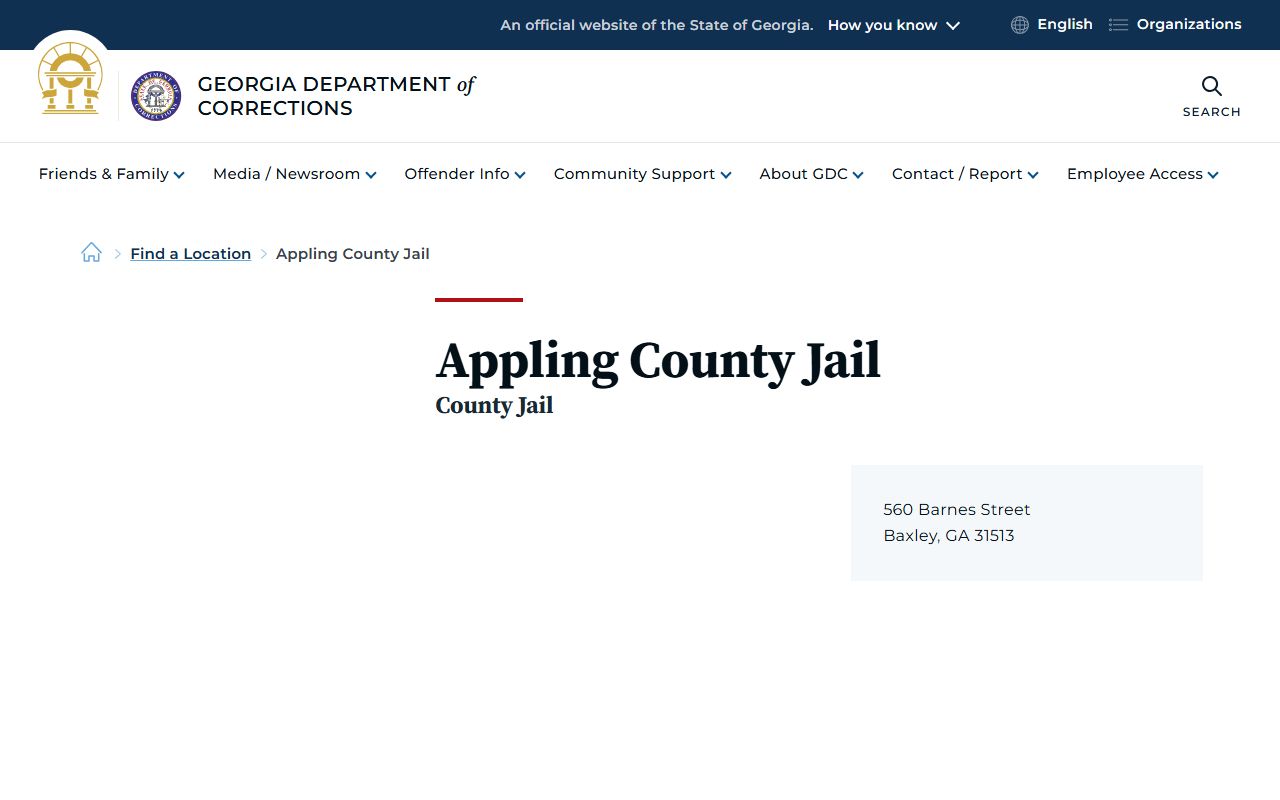
That facility listing helps separate the jail custody location from the court clerk's charge and disposition file.
| Document | Who Uses It | What It Means in Appling County |
|---|---|---|
| Complaint or warrant paperwork | Law enforcement, Magistrate Court, or prosecutor | Often starts the arrest, first appearance, bond, or preliminary charge path. |
| Accusation or information | Prosecutor | Formal filed charge used in many Georgia criminal cases, including misdemeanor and some felony paths. |
| Indictment | Grand jury and District Attorney | Formal felony charge returned by a grand jury and filed into the Superior Court case record. |
One arrest can produce more than one charge. A single booking event may later split into different counts, different severity levels, or different courts. A felony can start with arrest and warrant activity, then move into Superior Court after indictment, accusation, or bind-over. A misdemeanor or county traffic offense may stay in State Court. That path matters because a person may need the sheriff for booking status, Magistrate Court for warrant or first-appearance detail, and the clerk for filed court charges.
Find Appling County Charge Records
Filed Appling County court charge records should be searched through official court channels first. Georgia Courts e-access lists Appling State and Appling Superior as account-gated court-record entries. PeachCourt is the e-filing and court-document channel used for Superior, State, civil, and juvenile e-filing. If online access is blocked by registration, missing data, older paper records, sealed records, or a record that has not yet reached court, the next step is the Clerk of Superior, State, and Juvenile Court at 69 Tippins Street, Suite 103.
- Identify the stage: booking only, warrant/first appearance, filed misdemeanor, filed felony, or final disposition.
- For filed Superior or State Court charges, use Georgia Courts e-access and select the Appling provider entry when available.
- For filing activity or attorney document access, use PeachCourt, which requires account access.
- For current custody or bond questions, call the sheriff or jail rather than relying on the court docket alone.
- For copies, certified records, or older files, contact the clerk with the full name, date of birth if known, case number, citation number, and court level.
Statewide systems can help only with the right record type. The Georgia Department of Corrections search is for state prison, probation, or parole custody, not ordinary local jail booking. The GBI Sex Offender Registry is a registration database, not a list of all charges. Georgia criminal-history restriction rules can also affect what appears in public search results after dismissal or other eligible outcomes.
What Appling County Charge Records Show
Charge records should be read as case-stage records. A charge may be pending, amended, reduced, dismissed, dead docketed, nolle prossed, or resolved by plea, verdict, or sentence. The docket can also show arraignment, motions, continuances, bond entries, probation, restitution, appeal entries, and failure-to-appear events. Financial fields may include bond, court costs, fines, late fees, restitution, or copy fees when those items are part of the court file.
| Field | What It Shows |
|---|---|
| Case or citation number | The court tracking number, useful when asking the clerk for copies. |
| Court name | Superior, State, Magistrate, Municipal, Juvenile, or another court level. |
| Defendant and attorney | The accused person and counsel of record, including public defender when applicable. |
| Charge and count | The offense description, count number, severity, statute reference, or traffic citation basis. |
| Docket events | Filing, arraignment, plea, motions, trial, verdict, sentence, dismissal, nolle prosequi, or appeal. |
| Restrictions | Redactions for juveniles, sealed files, medical data, protected addresses, or restricted criminal history. |
The GDC Offender Query is useful only when the person is in Georgia state custody or under GDC supervision.
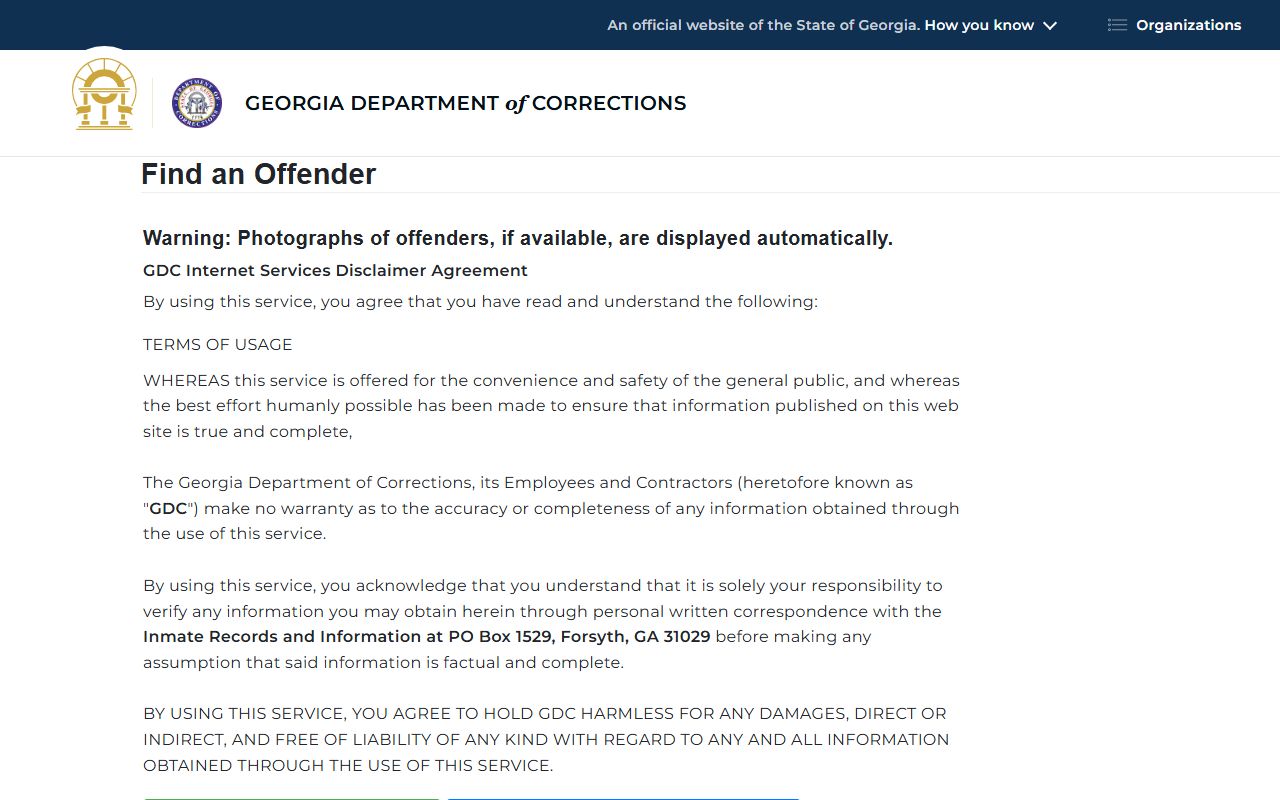
The GDC search can support a post-sentence custody check, but it does not replace Appling County clerk or jail records.
Appling County Charge Status Terms
Charge status terms affect how a record should be read. A pending charge is not proof of guilt. A conviction means a guilty plea, nolo plea accepted as a conviction for the case, or verdict has produced a finding and sentence. A dismissal or nolle prosequi may end one charge while other counts remain active. Dead docket status means prosecution is inactive but not always final.
| Status | Plain Meaning | Record Caution |
|---|---|---|
| Pending | The charge is still open or awaiting court action. | Do not treat it as a conviction. |
| Amended or reduced | The prosecutor or court changed the charge or severity. | Check the final count, not just the arrest label. |
| Dismissed | The charge was ended by court action. | Other charges in the same case may remain. |
| Nolle prosequi | The prosecutor chose not to pursue the charge. | It may support a restriction review, depending on facts and timing. |
| Dead docket | The case or charge is inactive. | It is not the same as an acquittal. |
Note: Ask for the final disposition when a charge has changed since booking, especially in multi-count cases.
Appling County Charges vs Convictions
Arrest records and filed charges often appear before any final case result. That timing is why charge records can be misunderstood. A person may be arrested on one suspected offense, formally charged with another, plead to a reduced count, or have a count dismissed. Public access rules allow many adult court files to be inspected, but public access does not change the legal meaning of each stage.
| Point | Charge | Conviction |
|---|---|---|
| Case stage | Accusation filed or pending in court. | Final guilty plea, accepted plea result, or verdict. |
| Proof level | Not a finding of guilt. | Resolved under criminal court proof and plea rules. |
| Where it appears | Booking, warrant, accusation, indictment, or docket. | Disposition, sentence, probation, restitution, or final judgment entry. |
| Common next check | Look for amended, dismissed, or pending status. | Look for sentence, conditions, and appeal activity. |
The Georgia.gov offender lookup guide explains the state-level route for people in GDC custody.
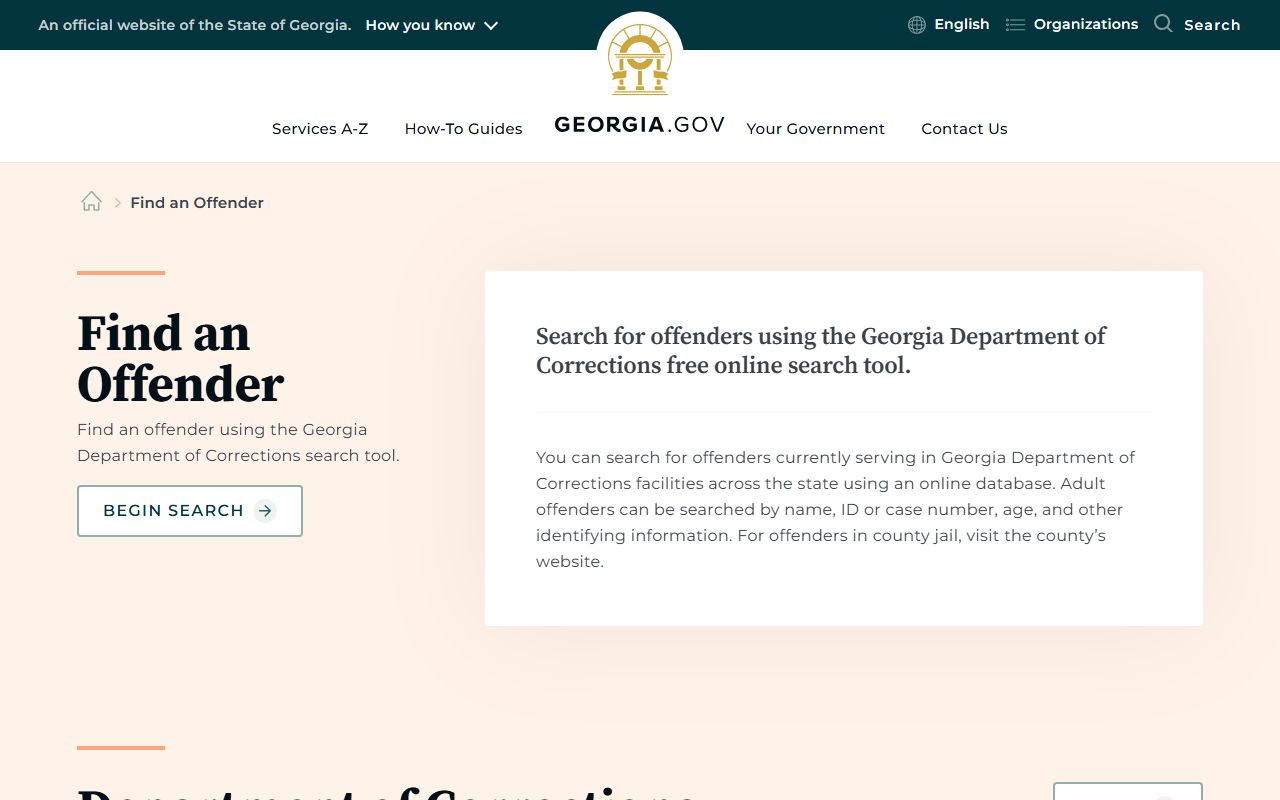
That statewide custody tool is a later-stage check, not the first source for new Appling County arrest charges.
Appling County Arrest Record Access
Georgia public-record law favors access unless a specific law, court order, or confidentiality rule applies. O.C.G.A. 50-18-70 states the open-government policy, while O.C.G.A. 50-18-71 governs inspection, copying, response timing, and fees for public records. Court files also remain subject to court rules and orders. Uniform Superior Court Rule 21 allows access limits when the rule's procedure is satisfied or another law controls.
The GBI sex offender registry information page describes the state registry framework under Georgia law.
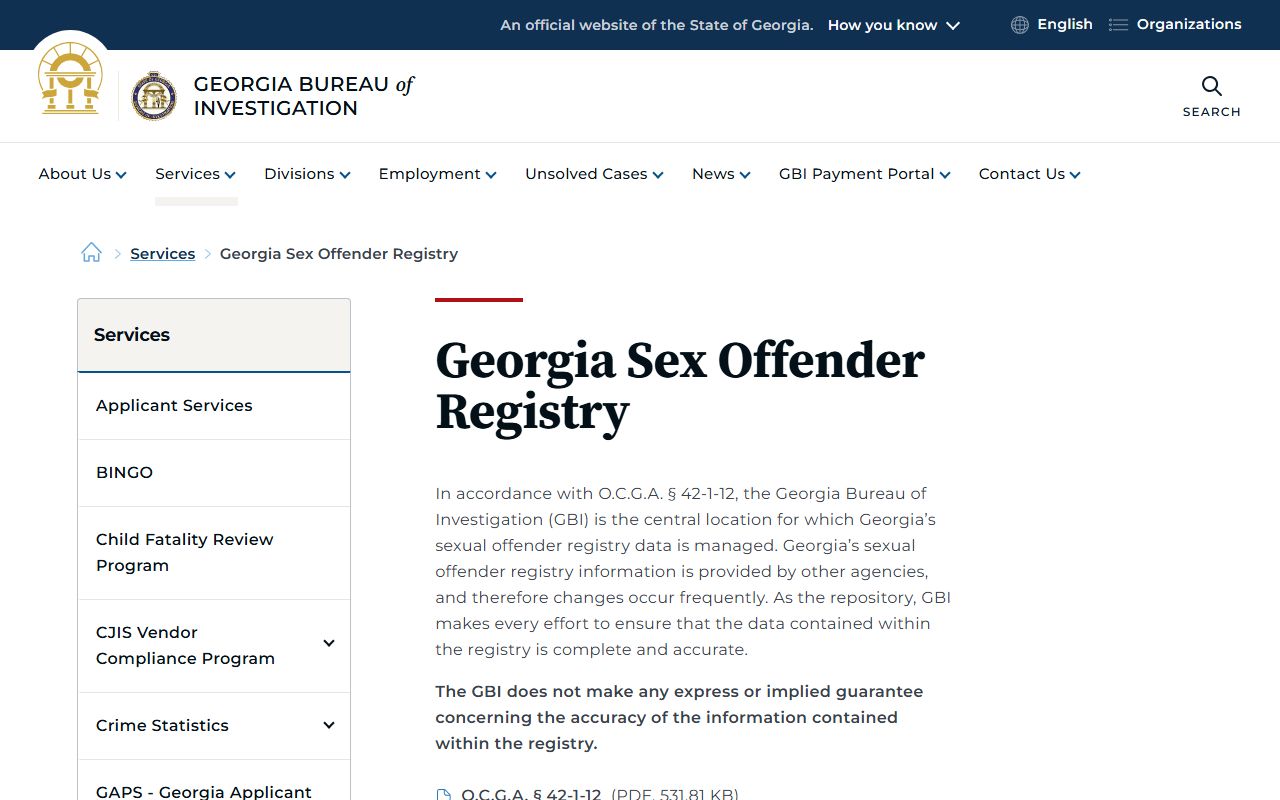
Registry information can relate to a past conviction, but it is not a broad search for every Appling County arrest or charge.
Important: Adult public access does not include sealed, juvenile, protected investigative, medical, or restricted criminal-history material.
Restricted Appling County Charge Records
Georgia uses the term record restriction for many criminal-history access limits. O.C.G.A. 35-3-37 controls eligible Georgia criminal-history restriction and sealing. The GBI states that for arrests after July 1, 2013, a person does not apply through GBI and should contact the prosecutor. In Appling County, that may mean the Brunswick Judicial Circuit District Attorney for Superior Court felony matters or the State Court Solicitor for State Court misdemeanors.
The GBI public registry search is separate from Appling County court charge lookup.
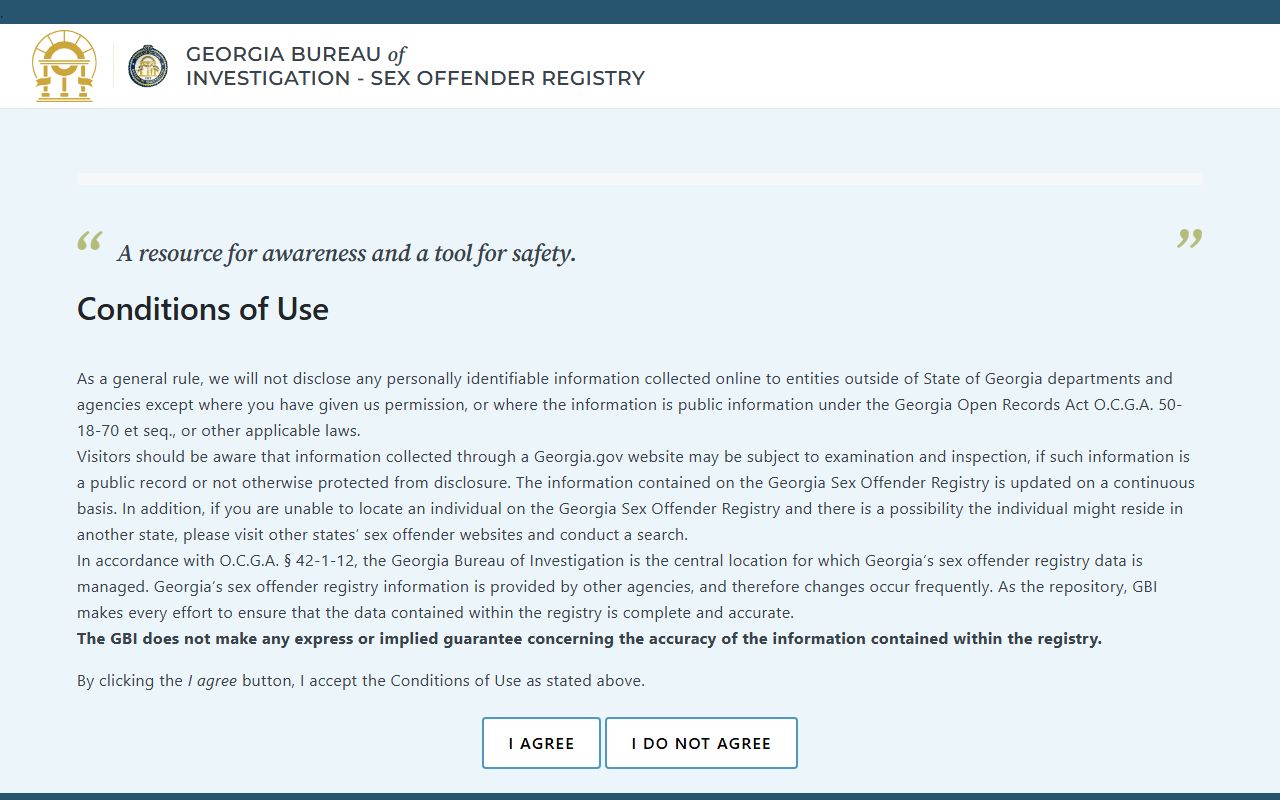
The registry image reinforces the need to choose the correct system for the record type being checked.
| Record Type | Public Access Limit | Best Local Route |
|---|---|---|
| Juvenile matter | Often limited to parties, counsel, agencies, or court order. | Contact the clerk only if authorized. |
| Restricted arrest or charge | May be blocked from public criminal-history access. | Contact the prosecutor or arresting agency based on date and case type. |
| Sealed court file | Public view limited by law or judge's order. | Ask the clerk what can be confirmed publicly. |
| Active investigation | Law-enforcement records may be withheld or redacted. | Submit a narrow request to the sheriff or police agency. |